New 'Naxtra' system solves fire problems and autonomy in the cold; Changan's first model with the technology hits the streets in 2026
Changan, in strategic partnership with energy giant CATL, has announced the launch of the world’s first mass-produced passenger vehicle equipped with sodium-ion batteries. The model, which incorporates “Naxtra” cell technology, is expected to hit the market in 2026. The project consolidates a decade of billion-dollar research and investment, marking a potential disruption in the automotive industry by presenting a commercially viable alternative to expensive lithium batteries.
SEE ALSO:
The new Naxtra battery achieves an energy density of 175 Wh/kg, the highest rate currently available for sodium-based cells. In practice, the system guarantees an initial range of more than 400 km, with engineering projections to reach 600 km as the supply chain evolves.
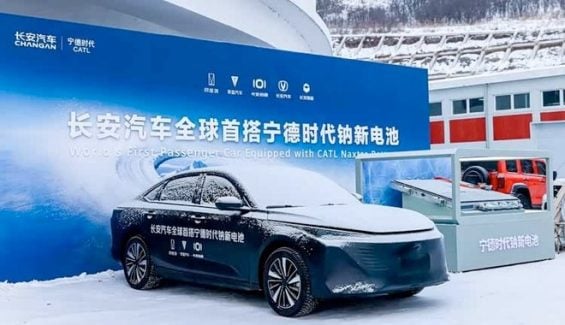
However, the technology’s greatest asset lies in its thermal stability. Unlike conventional batteries that “drain” in winter, the sodium system retains 90% of its capacity even in temperatures of -40 °C. In addition to efficiency in extreme climates, stress tests demonstrated high safety rates, with no records of fire or smoke in simulations of serious accidents.
From an economic and environmental point of view, the replacement of lithium by sodium — an abundant and easily extracted element — directly attacks the final cost of the vehicle. The change reduces dependence on scarce and geopolitically disputed raw materials, as well as simplifying cell recycling processes.
CATL will supply the technology for all Changan lines, betting on a strategic coexistence between sodium (entry and intermediate) and lithium (high performance) models. To enable mass adoption, the plan includes installing 3,000 battery swap stations in 140 Chinese cities by the end of 2026.
The infrastructure will have a special focus on the cold regions of northern China, where the new system is expected to solve the historic problem of autonomy of electric cars in winter. Sodium is expected to quickly consolidate itself as the standard solution for global low-cost electric mobility.



