End of subsidies in China and competition from Geely bring down BYD's performance; export target for 2026 is revised downwards
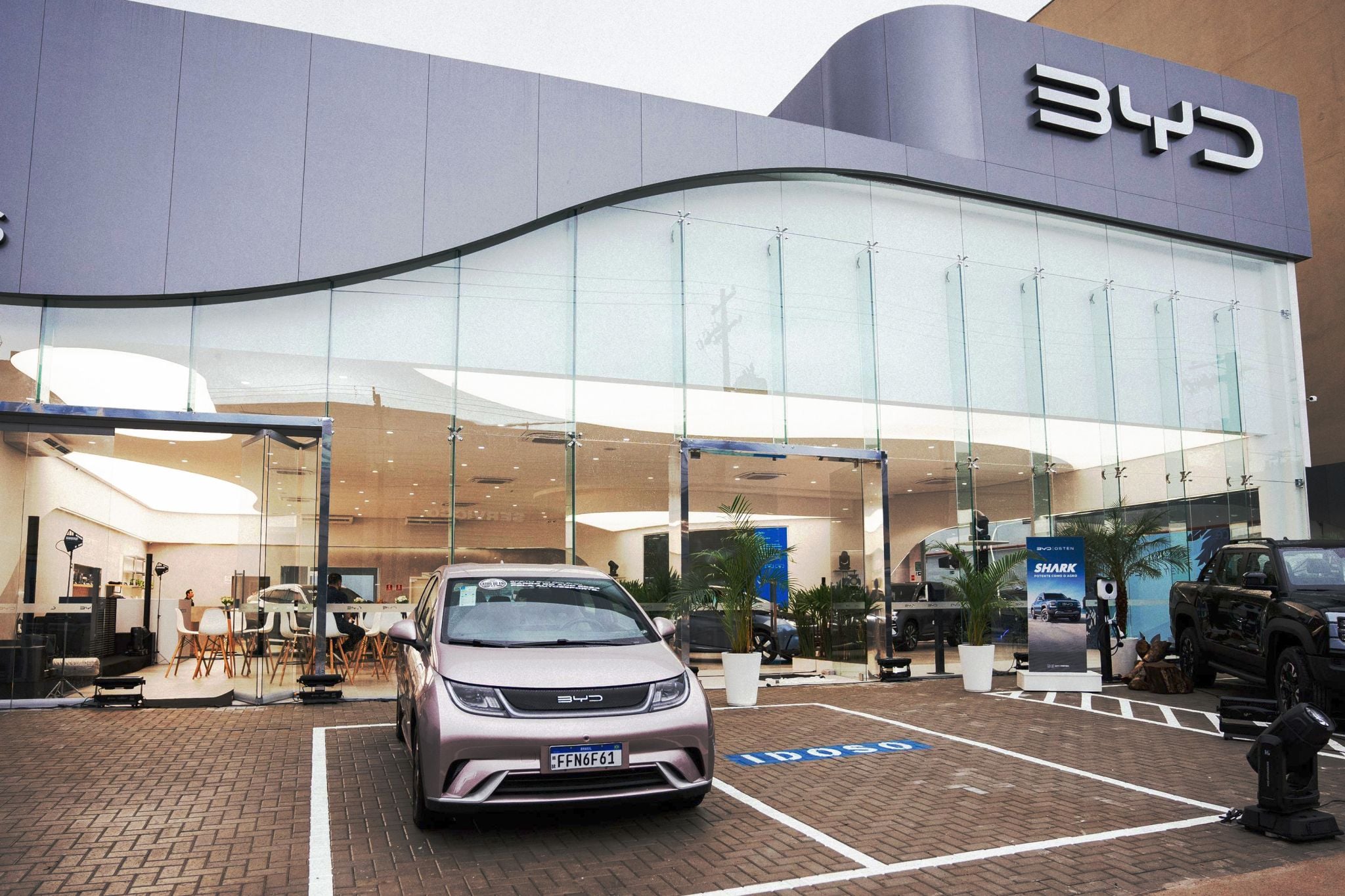
BYD started 2026 facing its most adverse scenario since the beginning of the decade. The Chinese automaker recorded its fifth consecutive month of global contraction in January, with a sales volume of 210,051 electrified vehicles. The result represents an abrupt drop of 30.1% compared to the same period of the previous year, marking the company’s worst performance for the month since 2020, when the sector was paralyzed by the pandemic.
The reaction of the financial market was immediate, with a negative impact on the company’s shares traded on the Hong Kong and Shenzhen stock exchanges. The slowdown is mainly attributed to the end of subsidies for electric vehicles in China and the intensification of the price war in the domestic market.
SEE ALSO:
The detailed data show that 100% electric vehicles (BEVs) were the most affected, with a 33.6% decline in sales. Plug-in hybrid models (PHEVs) had a slightly smaller retraction of 28.5%.
This scenario reflects BYD’s loss of competitive advantage in the entry-level segments in China, where rivals such as Geely have been gaining ground with models below US$ 25,000 (about R$ 142,500). This situation is even true for Brazil, where the new Geely EX2 has been stealing sales from the BYD Dolphin and Dolphin Mini.
To try to stem the bleeding and respond to domestic stagnation — which has also hit brands such as Xpeng and Chery — Chinese automakers have resorted to aggressive strategies, including offering free advanced autonomous driving software to attract consumers.
The only boost in the monthly balance came from exports, which grew 51.5% compared to the previous year, surpassing the barrier of 100,000 units sent abroad. However, the volume was not enough to compensate for the weakness of the domestic market.
Faced with this scenario, BYD opted for caution: the automaker officially revised its global shipment target for 2026. The projection, which was previously 1.6 million vehicles exported, was reduced to 1.3 million, signaling that international expansion may not occur at the speed the company previously planned.



