Novelty promises comfort similar to that of higher classes at a lower cost, reflecting the trend of modularity in commercial aviation
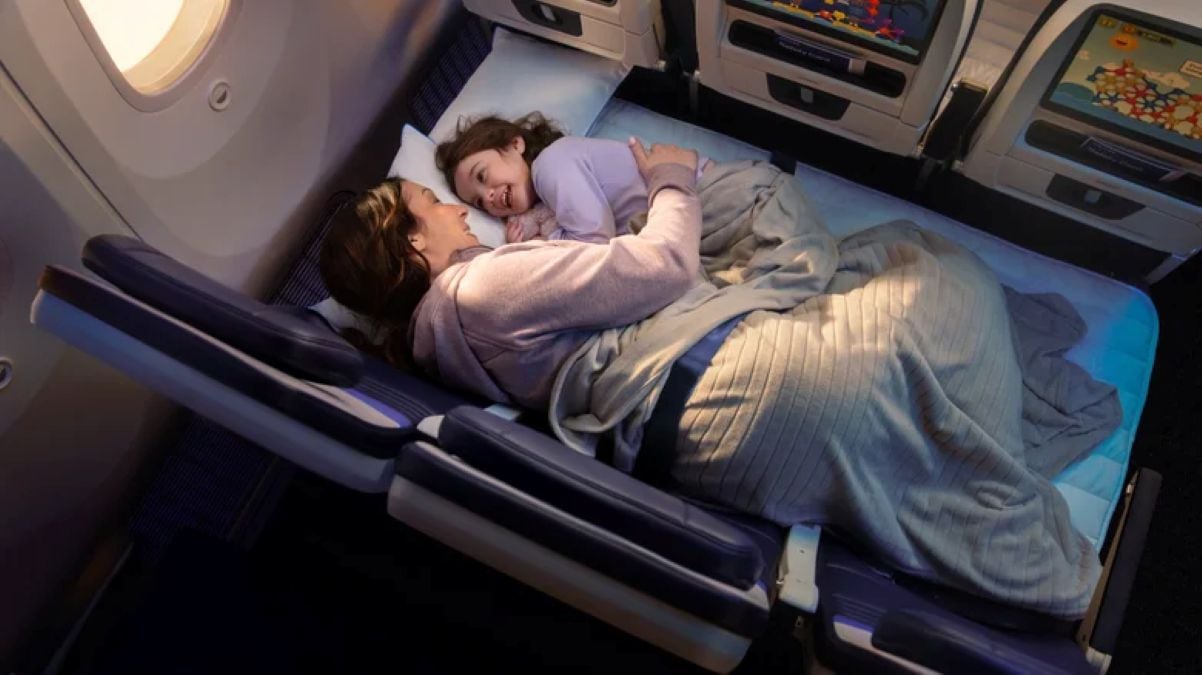
The American airline United Airlines has announced a new bet to mitigate the discomfort of passengers on long-haul flights. Dubbed “Relax Row,” the concept allows regular economy class seats to be converted into a flat, bed-like surface. The company’s expectation is that the novelty will enter commercial operation from 2027.
Under the proposal, the customer will be able to buy an entire row, consisting of three seats. The big difference is in the engineering of the seats, which have adjustable leg rests. When raised by 90 degrees, they align with the seat, forming a continuous, flat area. To bring the experience closer to the comfort offered in the upper classes, the company will provide a rest kit with mattress protector, a blanket of enlarged dimensions and extra pillows. Families traveling with young children will also have kits with playful items available.
SEE ALSO:
According to United’s schedule, the technology will be gradually implemented in more than 200 aircraft in the wide-body fleet, specifically the Boeing 787 Dreamliner and Boeing 777 models, with completion scheduled for the year 2030. In terms of cabin layout, each aircraft will be configured with 12 of these modular rows, strategically positioned in the transition zone between traditional economy and premium economy.
While the announcement brings freshness to the North American market, the architecture is not unheard of in global aviation. The precursor of the format was Air New Zealand, which has been operating the Skycouch system for years. The New Zealand model is well accepted by the public, even with the space limitations inherent in a standard economy cabin.
For travelers, the main advantage of “Relax Row” lies in the value for money. The alternative offers a higher level of rest than the upright seat at a fraction of the price charged for a business class ticket. The initiative reflects a recent trend by airlines to diversify fare options, seeking to monetize aircraft space and attract passengers willing to pay for more comfort without migrating to premium cabins.



