The automaker's president detailed the damage of the 2025 storm and reveals complex logistics operation to avoid assembly line shutdown
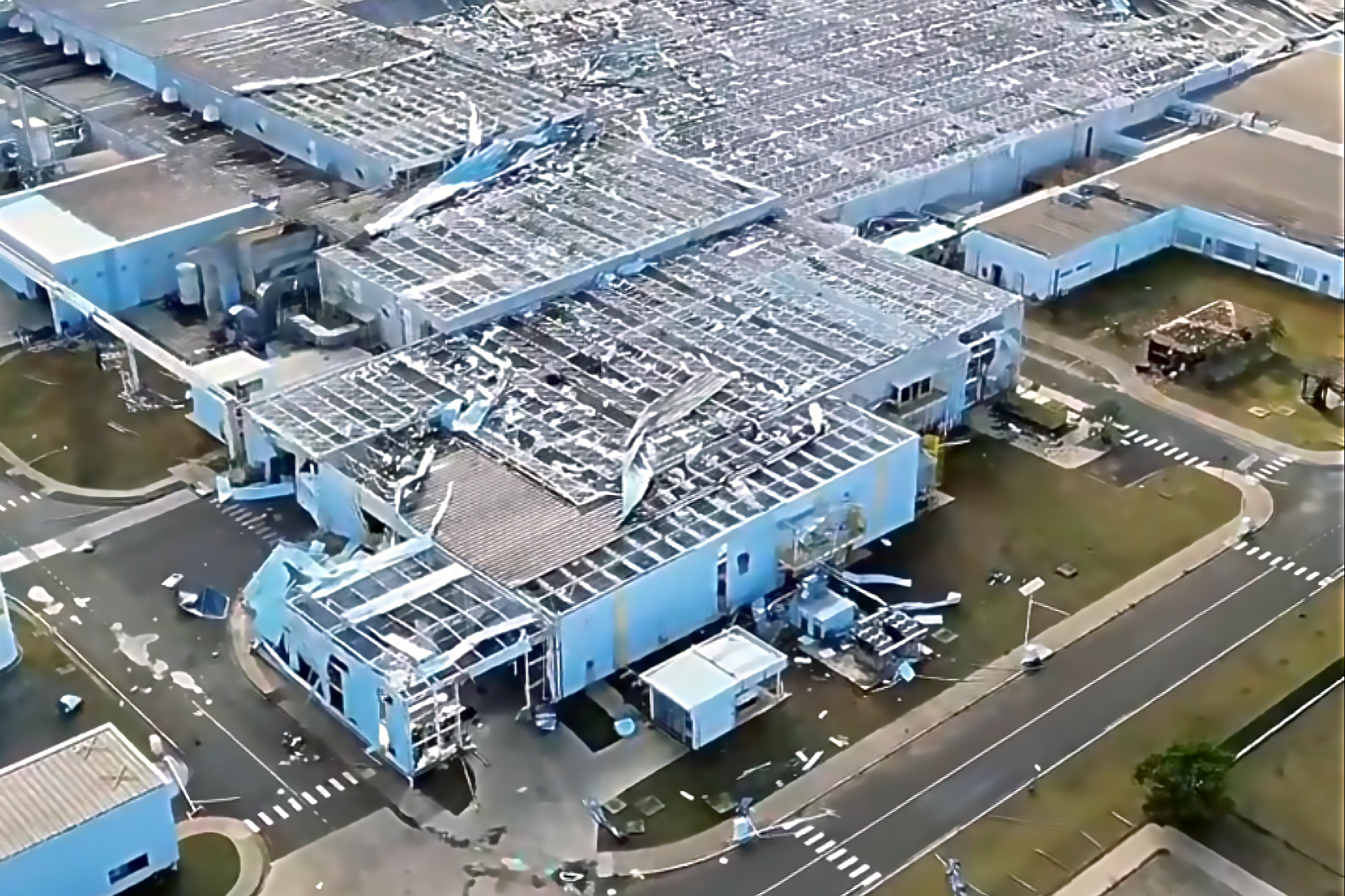
The reconstruction of Toyota’s engine plant in Porto Feliz (SP), devastated by a storm in September 2025, will require a longer period than initially planned: the unit should only resume its full operating capacity in early 2028. The projection was confirmed by Evandro Maggio, president of Toyota do Brasil, to the newspaper Valor Econômico. The severity of the structural damage — which included the collapse of an overhead crane on sensitive machinery on the assembly line — made any short-term solution unfeasible.
To pay for the complex recovery, the automaker will use indemnities from the insurer combined with its own resources. While the original plant remains inoperative, Toyota has set up an emergency logistics operation to avoid shortages of the national line.
The production of propellers was temporarily transferred to a rented warehouse in Porto Feliz, which served only as a warehouse. At the same time, the company began importing vital components from factories in Japan, Turkey and Indonesia. To mitigate the financial impact of this foreign operation, the Brazilian government included these pieces in the Ex-Tariff regime, granting a reduction or temporary exemption from the Import Tax — an essential measure to maintain the competitiveness of the vehicles.
SEE ALSO:
The strategic importance of Porto Feliz is high for the brand in the country. This is because the unit is the exclusive supplier of the engines that equip the models manufactured in Sorocaba (Corolla Cross, Yaris and Yaris Cross) and Indaiatuba (Corolla sedan). The impact of the disaster also changed the brand’s global supply chain: since 2022, the Brazilian plant has been exporting 2.0 Dynamic Force engines to the North American market. With the stoppage, the United States was once again supplied directly by Japan.
In the labor field, the catastrophe forced a readjustment of the staff. Part of the approximately 800 employees of the affected unit was transferred to the Sorocaba plant, while another contingent had their contracts temporarily suspended, entering a layoff regime until the manufacturing situation is normalized.



