Project sold on Facebook Marketplace proposes 3D replica of the supercar, but raises doubts about feasibility and quality
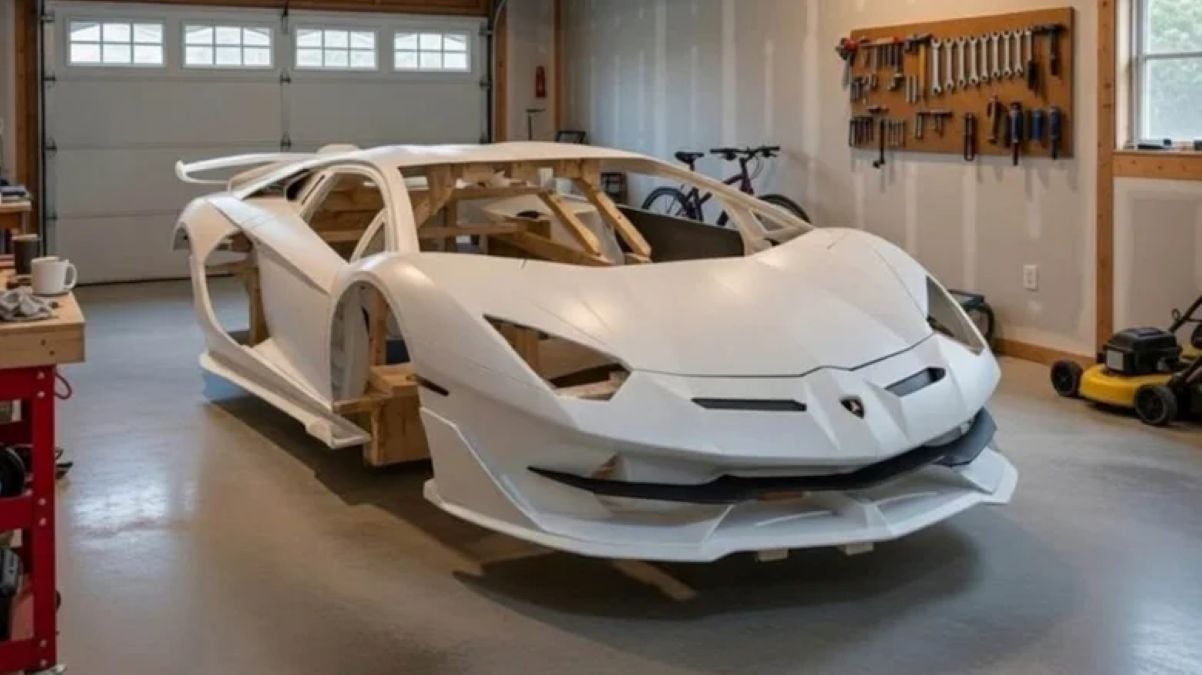
The dream of having a supercar is not always feasible for the pocket, but that does not stop anyone from dreaming or creating strategies to achieve this goal. A Facebook Marketplace seller is proof of this and claims to have the perfect solution.
The announcement was made in north Austin, the capital of Texas, in the United States, where a fully 3D printed Aventador body is presented, ready for final assembly. Just bring the mechanical assembly, the structure, the internal components and the chassis, as well as glue to join all the parts.
SEE ALSO:
In the post, it is possible to see that it is just a set of components of the Aventador that seem to have been scanned in 3D and replicated, and that it was not produced in a home 3D printer, like the ones we are used to seeing. It is possible that some components, such as the internal structure, were made from several smaller subassemblies glued together.
The kit is being sold for US$ 5,000 (approximately R$ 26 thousand), and can reach US$ 7,500 (approximately R$ 39 thousand) if the buyer wants the exterior and interior to be glued, or US$ 8,500 (approximately R$ 44 thousand) if he wants the parts of the structure to also be included in the collage. The ad also informs that the parts need to be reinforced with fiberglass to ensure structural integrity, making it almost impossible to transform the carcass into a functional vehicle like the original.
Another factor that makes people wary of this contraption is the fact that the advertiser does not specify the type of plastic used, which can be something more resistant, such as ABS, or something more common and fragile, such as the PLA filament, which would degrade under the constant exposure to UV rays to which a car is subjected.
This project was not made to be a functional car and circulate on the streets, but to make it possible to transform something that already exists into something unusual, placing this body on top of another or other vehicles, surprising people out there and even serving as a piece worthy of exhibitions.



